Brake Master Cylinder: Adjustments
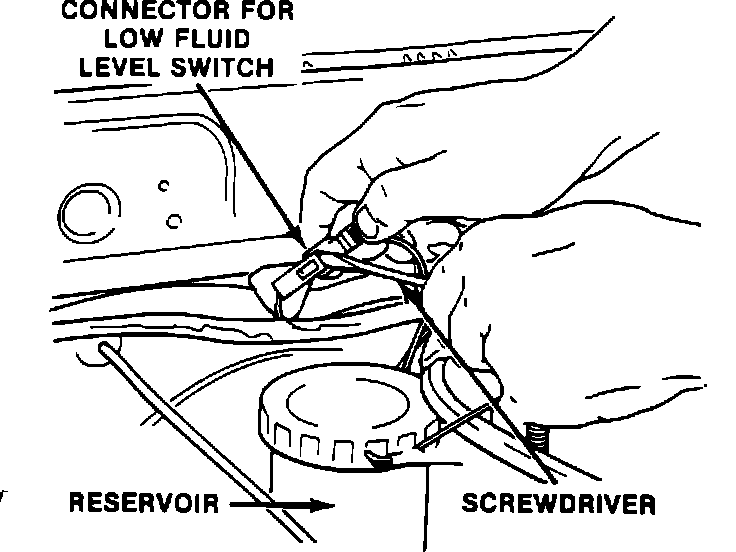
Disconnecting Low Fluid Level Switch:
Master Cylinder Gauge:
1. Disconnect electrical connector from low fluid level sensor.
2. Disconnect brake lines from master cylinder. Brake fluid is caustic and must not come into contact with plastic or painted surfaces. Use extreme caution when handling this fluid which contains polyglycols and polyglycol ethers.
3. Disconnect and cap hydraulic lines at master cylinder ports, then remove master cylinder attaching nuts and master cylinder.
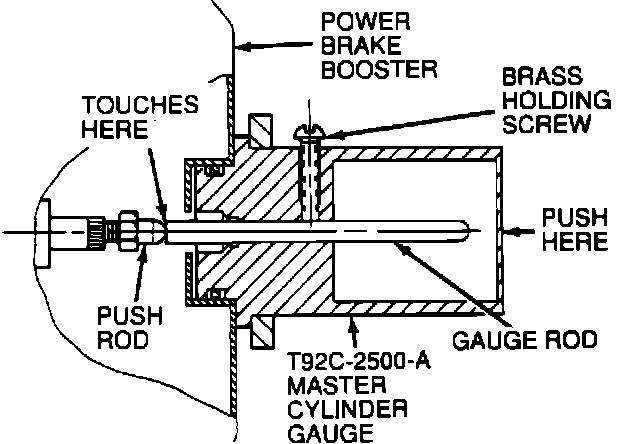
4. Loosen brass holding screw on master cylinder gauge tool No. T92C-2500-A or equivalent and retract gauge rod.
5. Attach gauge to power brake booster and torque retaining nuts to 87-140 inch lbs.
6. Start engine and run at idle for approximately 15 seconds.
7. Gently push end of gauge rod until rod just touches power brake pushrod.
8. Tighten brass screw to secure gauge rod in place.
9. Carefully remove master cylinder gauge from power brake unit, then turn engine off.
Measuring Master Cylinder Gauge Rod:
Master Cylinder:
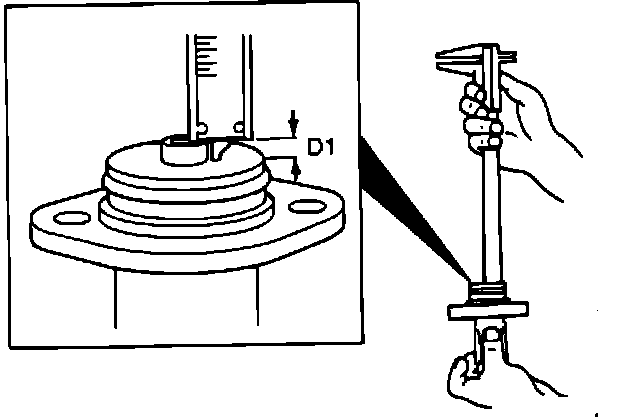
10. Measure and record master cylinder gauge rod height.
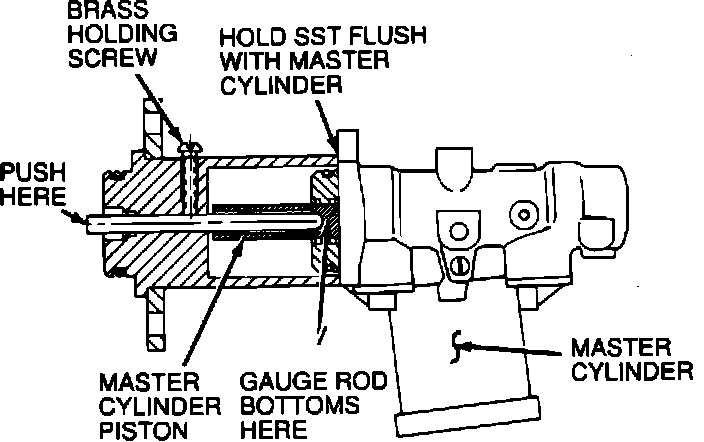
11. Loosen brass holding screw, then position gauge on master cylinder.
12. Gently push end of gauge rod until end of rod just bottoms in master cylinder piston, then tighten the brass screw.
13. Carefully remove gauge from master cylinder.
14. Measure and record gauge rod height.
15. Subtract first measurement from second measurement, then adjust power brake pushrod nut to shorten or lengthen pushrod an amount equal to the difference between the two dimensions:
a. If first measurement is larger than second measurement, lengthen pushrod.
b. If second measurement is larger than first measurement, shorten pushrod.