Turbocharger: Service and Repair
WARNING: Turbocharger operates at high speed. To avoid injury, keep fingers and other objects away from openings.
PRELIMINARY PROCEDURE
^ Before starting turbocharger unit service/removal procedure, clean area around turbocharger assembly with a non-caustic solution. Cover openings at turbocharger connections to prevent entry of foreign material while turbocharger is removed. Interruption or contamination of bearing oil supply can result in major turbocharger damage.
^ When removing turbocharger assembly, take special care not to bend, nick, or in any way damage compressor wheel blades. Damage may result in rotating assembly imbalance and failure of bearings and oil seal. Any time a basic engine bearing (main bearing, connecting rod bearing, camshaft bearing) has been damaged in a turbocharged engine, oil and filter should be changed as a part of the service procedure. Any time a turbocharger assembly has been removed, gently spin the turbine wheel before reassembly to ensure that rotating assembly does not bind. Refer to Failure Analysis and Preventive Measures.
REMOVAL
1. Disconnect negative battery cable.
2. Drain coolant.
Compressor Housing Air Outlet Hose:
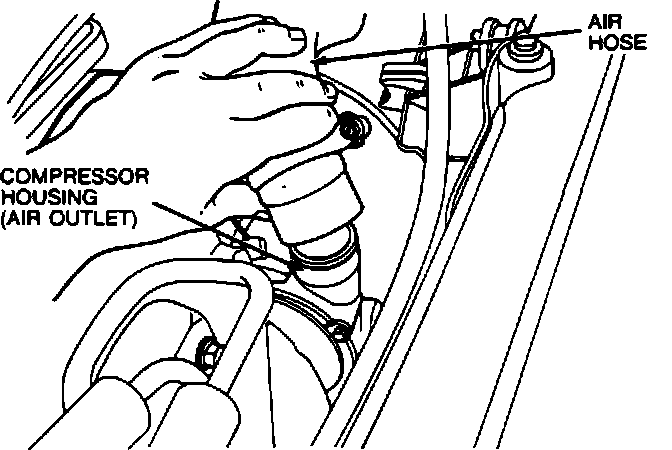
3. Remove air hose from turbo compressor housing (outlet).
Compressor Housing Air Inlet Hose:
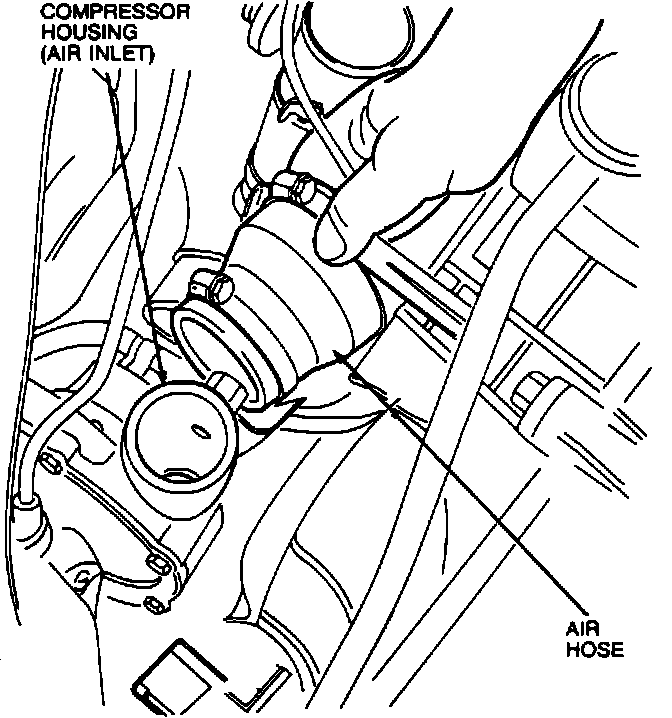
4. Remove air hose from air inlet side of turbocharger assembly.
Turbocharger Heat Shield:
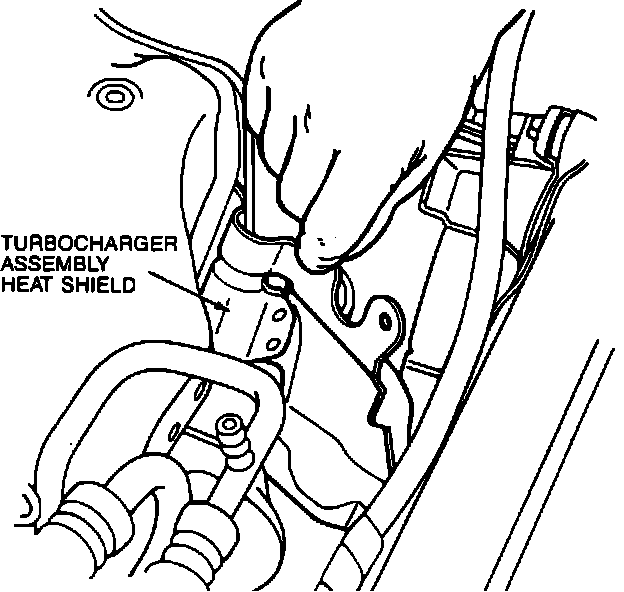
5. Remove heat shields from exhaust manifold and turbocharger assembly.
EGO Sensor Electrical Connector:
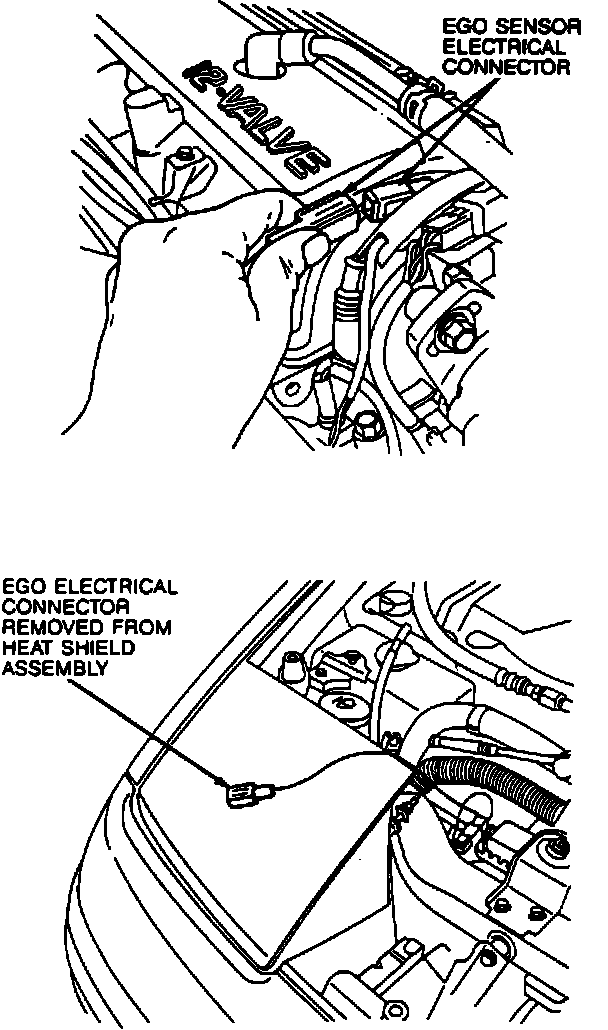
NOTE: It may be necessary to disconnect oxygen sensor electrical connector and move wiring away from heat shield assembly.
Oil Feed Line:
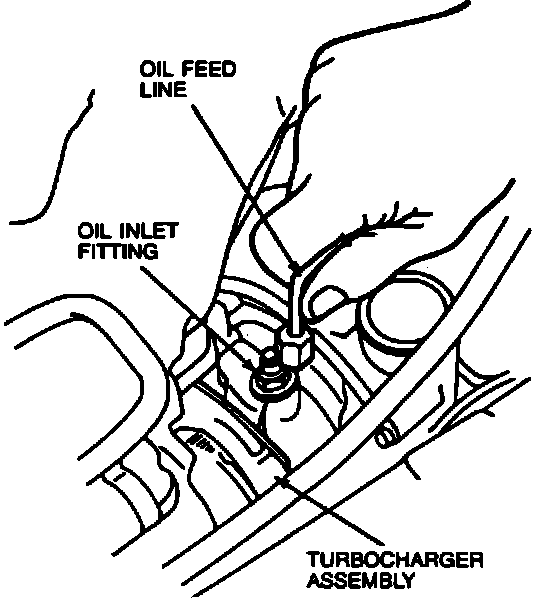
6. Remove oil feed line from turbocharger assembly.
Oil Return Line:
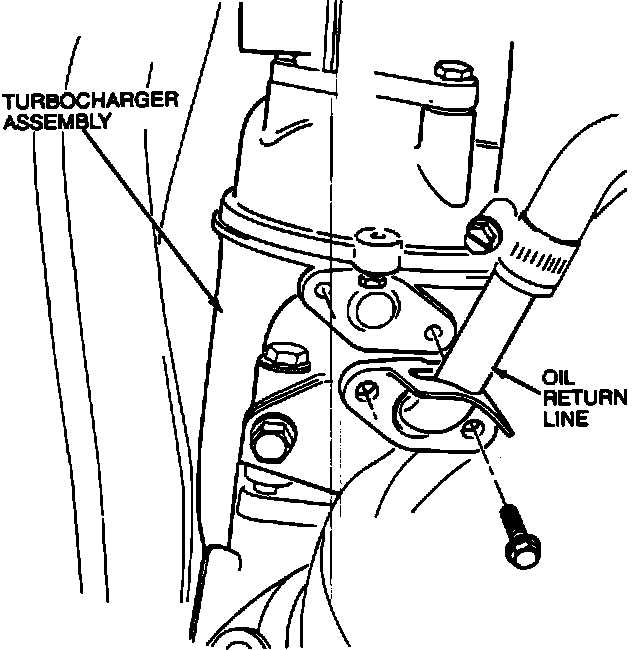
7. Remove oil return line from turbocharger assembly.
Coolant Inlet Hose:
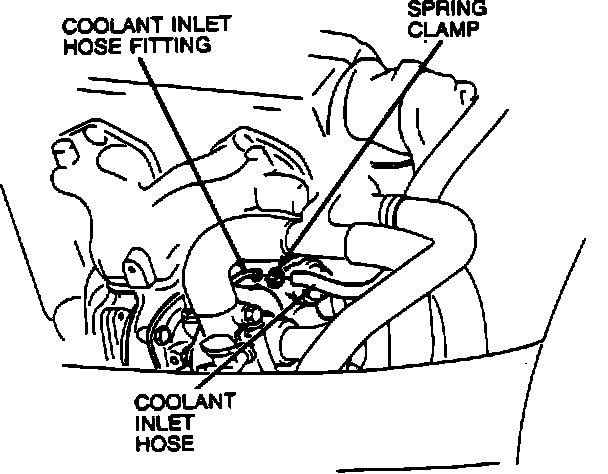
8. Remove coolant inlet hose from turbocharger assembly.
Coolant Outlet Hose:
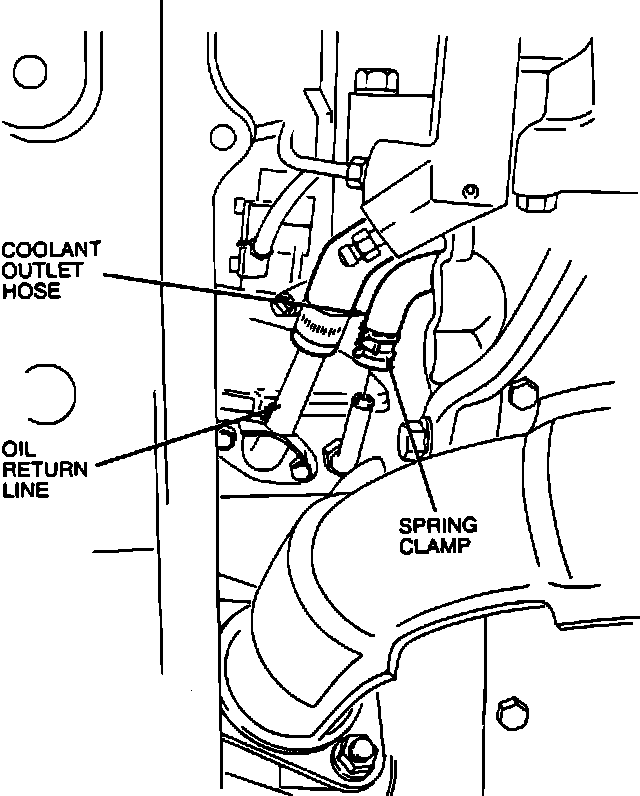
9. Remove coolant outlet hose from turbocharger assembly.
EGR Tube:
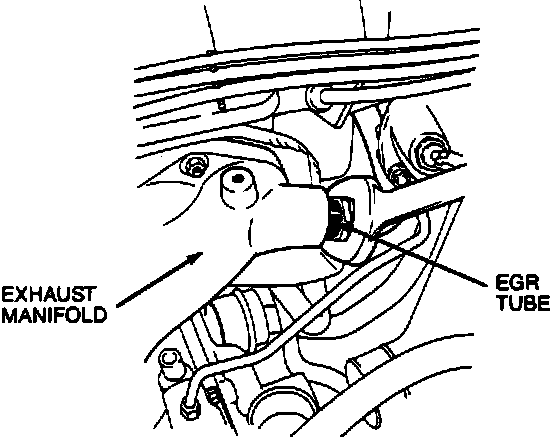
10. Remove EGR tube from exhaust manifold.
Turbo Boost Control Solenoid Valve:
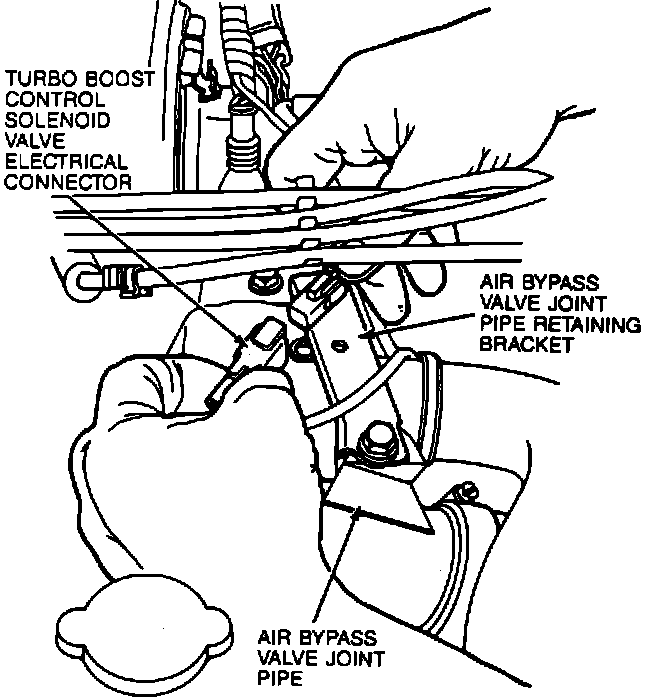
11. Disconnect [1][2]turbo boost control solenoid valve electrical connector.
Turbo Boost Control Solenoid Valve Air Hose:
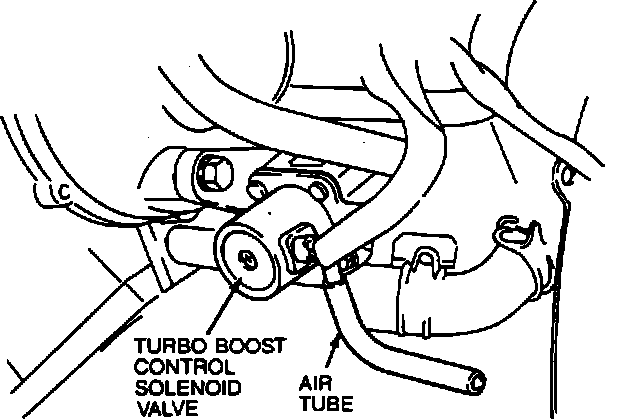
12. Remove air tube from boost control solenoid valve at turbocharger outlet air hose.
Turbocharger Assembly Retaining Bracket:
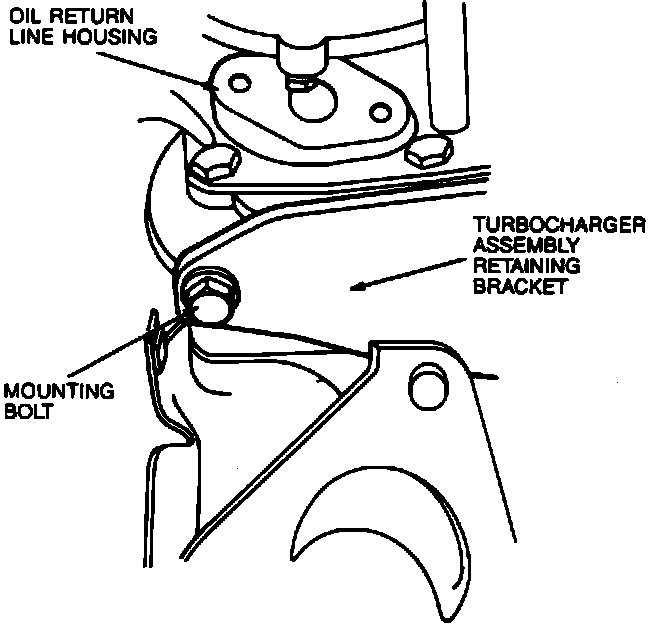
13. Remove mounting bolt from retaining bracket under turbocharger assembly.
14. Discharge A/C system with approved refrigerant storage and recycling equipment.
15. Remove refrigerant line from head of compressor.
16. Remove oxygen sensor.
17. Remove converter inlet pipe from turbocharger joint pipe.
Turbocharger Assembly And Exhaust Manifold:
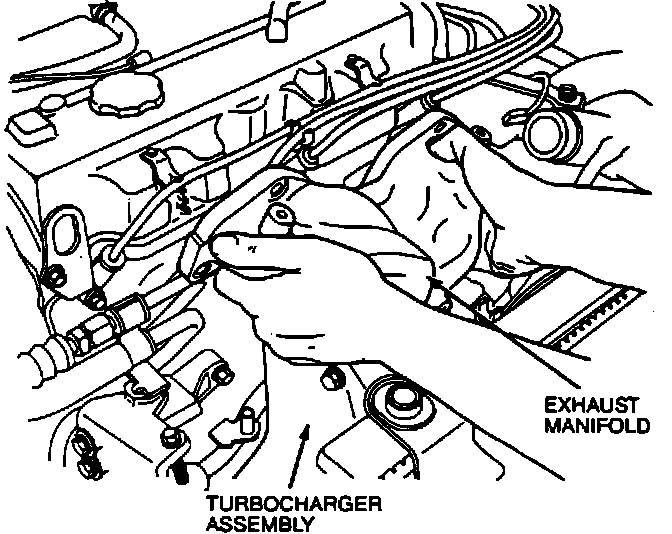
18. Remove exhaust manifold and turbocharger as an assembly.
Turbocharger Assembly:
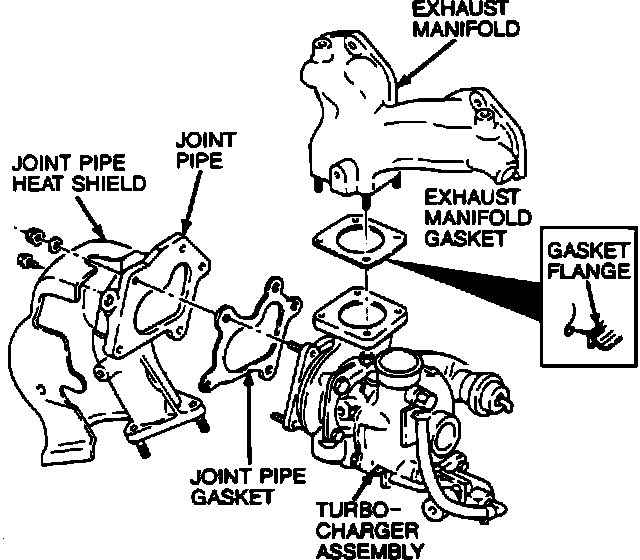
19. Remove exhaust manifold, turbocharger, inlet pipe joint pipe, and heat shield assembly from turbocharger.
INSTALLATION
1. Install joint pipe and heat shield assembly onto turbocharger. Torque mounting nuts to 27 - 46 ft lb (37 - 63 Nm).
2. Install exhaust manifold onto turbocharger and torque mounting nuts to 20 - 29 ft lb (27 - 39 Nm).
CAUTION: Replace exhaust manifold-to turbocharger gasket and/or joint pipe gasket if bent or cracked. Only use specified nuts to mount exhaust manifold and joint pipe to turbocharger.
3. Install exhaust manifold and turbocharger as an assembly into vehicle.
4. Install converter inlet pipe onto joint pipe.
5. Install mounting bolt to retaining bracket under turbocharger assembly.
6. Install oil return line and coolant outlet hose to turbocharger assembly.
7. Install air tube to turbocharger outlet air hose.
8. Reconnect [1][2]turbo boost control solenoid valve electrical connector.
9. Install oxygen sensor.
NOTE: To facilitate remaining installation procedure, place wiring assembly out of the way of the heat shield assembly.
10. Install EGR tube onto exhaust manifold.
11. Install coolant inlet hose onto turbocharger assembly.
Oil Inlet Fitting:
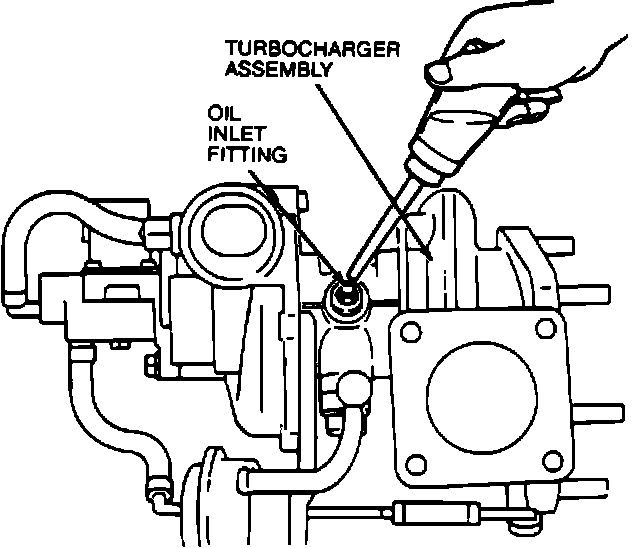
12. Install oil feed line onto turbocharger assembly.
NOTE: When reinstalling turbocharger, add 0.85 fl oz (25 ml) of engine oil in turbo oil passage before oil feed line is installed.
13. Install heat shields onto exhaust manifold and turbocharger assembly.
14. Install air hose onto turbo air inlet (compressor housing).
15. Install air hose onto turbo air outlet side (compressor housing).
16. Reconnect oxygen sensor electrical connector and install wiring assembly.
17. Install refrigerant lines.
18. Fill radiator with engine coolant.
19. Install negative battery cable.
21. After turbocharger replacement, perform the following before starting the engine:
a. Disconnect electrical connector from ignition coil.
b. Crank engine for approximately 20 seconds.
c. Reconnect electrical connector to ignition coil.
20. Recharge A/C system.
21. Start engine and let idle 30 - 60 seconds before driving.