Positive Crankcase Ventilation: Description and Operation
Typical PCV System:
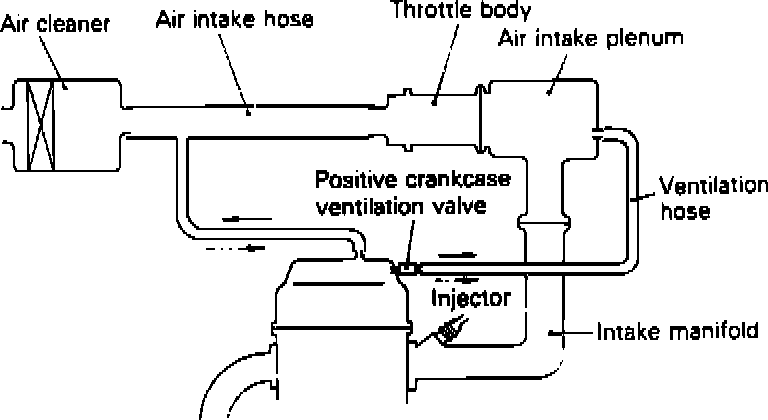
The PCV system vents harmful combustion blow-by gases from the engine crankcase into the engine air intake for burning with the normal air/fuel mixture. The PCV valve limits the fresh air intake to suit the engine demand.
PCV Valve:
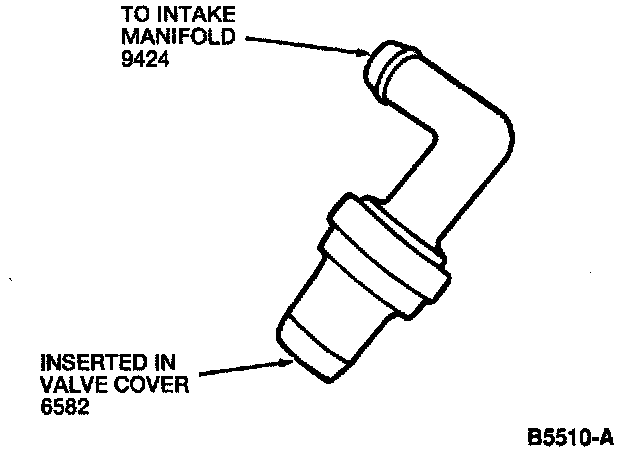
The ventilation valve is operated by pressure differential between the crankcase and intake manifold. With no pressure differential (the engine not operating) or when the pressure of the intake manifold is greater than that of the crankcase, the valve is closed. During engine idle, high intake manifold vacuum overcomes valve spring tension, and is pulled toward the intake manifold side by vacuum. This causes air to pass through the restricted passage between the valve and the housing. During normal engine operation, the valve remains in a position where spring pressure and intake manifold vacuum balance. The amount of air flow then depends on the position of the valve. The valve also prevents combustion backfiring into the crankcase. If the PCV valve should become plugged, the system routes excess crankcase pressure and vapors back through the ventilation hose and air cleaner assembly into the induction system. The valve is normally located within a hose between the crankcase and the throttle body or intake manifold.