Rear

The rear disc brake system includes:
^ Rear brake shoes and linings
^ Rear disc brake caliper
^ Rear disc brake rotors
^ Rear wheel brake hoses
^ Rear disc brake caliper anchor plates
^ Parking brake rear cable and conduits

During normal operation, hydraulic pressure from the brake master cylinder pushes the rear disc brake caliper piston forward and applies pressure on the inboard brake shoe and lining. This pressure also causes the rear disc brake caliper to slide inward on the brake caliper bolt and the guide pin. As the brakes are applied, the square-cut piston seal distorts.
When the brake pedal is released, the square-cut seal returns the rear disc brake caliper piston to its normal position. If the rear disc brake caliper piston moves no more than the square-cut seal deformation limit, no self-adjustment takes place. If the movement of the rear disc brake caliper piston is greater than the deformation limit of the square-cut seal, the rear disc brake caliper piston and sleeve nut will travel on the threads of the rear disc brake adjuster spindle. This is because the loosened rear wheel brake caliper spring allows the sleeve nut to rotate.
When the brake pedal is released, the rear disc brake caliper piston returns the amount the square-cut seal was deformed, but it does not return to its original position. This is because the tightened rear brake automatic adjuster spring does not allow the sleeve nut to rotate and travel on the thread of the rear disc brake adjuster spindle. The rear disc brake caliper piston can adjust outward from the rear disc brake caliper housing but it cannot move inward.
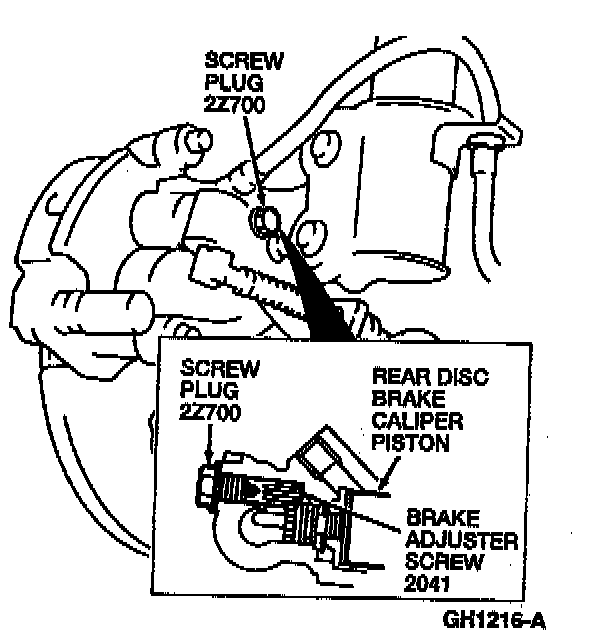
The rear disc brake caliper also includes a manual brake adjuster for manually retracting the rear disc brake caliper piston. This makes it unnecessary to pry open the rear disc brake caliper during rear brake shoe and lining replacement.