Parking Brake System: Description and Operation
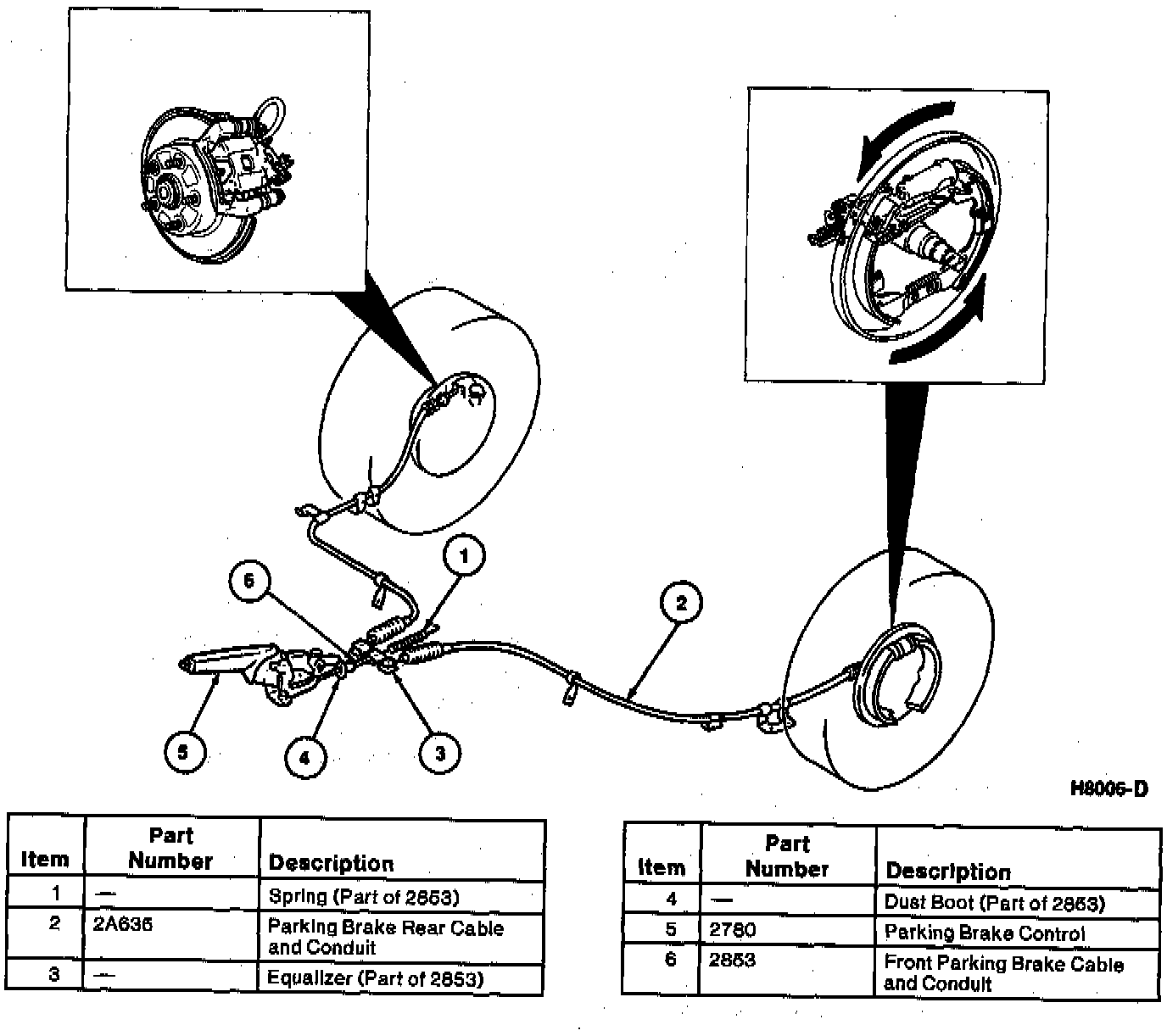
The parking brake system includes:
^ Parking brake control
^ Parking brake rear cable and conduits
^ Front parking brake cable and conduit
^ Rear brake operating lever (disc brakes only)
^ Parking brake lever (drum brakes only)
The parking brake is a mechanical, rather than hydraulic, method of applying the rear brakes. Normally, the parking brake is used whenever the vehicle is parked to prevent unexpected vehicle movement.
The parking brake is applied when the parking brake control, located in the console panel, is pulled upward by the driver. The parking brake control motion is transferred to the rear brakes through a front parking brake cable and conduit, to the equalizer that evenly pulls out the two parking brake rear cable and conduits.
On rear disc brakes, the parking brake rear cable and conduits are attached to a rear brake operating lever on each rear disc brake caliper. When the parking brake control is applied, the motion is transferred through the front parking brake cable and conduit to the equalizer. The equalizer divides the force received from the parking brake control and transfers it through the parking brake rear cable and conduits to the rear brake operating lever at each rear brake.
In rear drum brakes, movement of the trailing brake shoe and lining is transferred to the leading brake shoe and lining by the rear brake strut and quadrant. When the trailing brake shoe and lining contacts the brake drum, the rear brake strut and quadrant pushes the leading brake shoe and lining against the brake drum. Both sets of rear brake shoes and linings are then applied against the brake drums.