Vacuum Brake Booster: Description and Operation
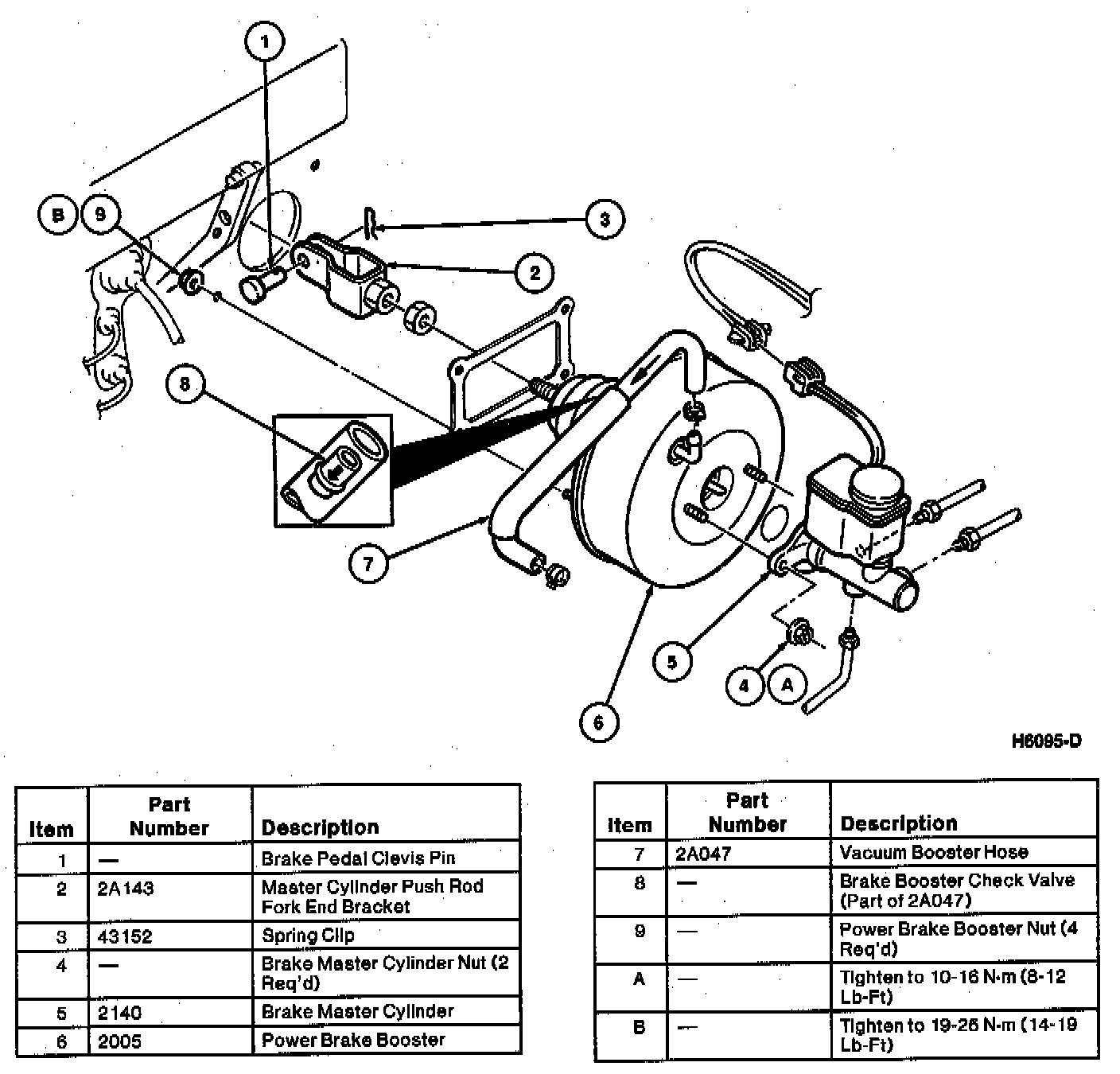
The power brake system includes:
^ Power brake booster
^ Vacuum booster hose
^ Brake booster to master cylinder push rod
^ Master cylinder push rod fork end bracket
The power brake booster reduces the effort required to push the brake pedal and apply the brakes. Power assist occurs due to a pressure differential within the power brake booster. When the brakes are not applied and the engine is running, engine vacuum is present on both sides of the power brake booster diaphragm.
When the brake pedal is pressed, the brake pedal input rod moves forward inside the valve body until the vacuum port closes. At this point, vacuum is still present on each side of the diaphragm. Then, as the brake pedal input rod continues to move forward, an atmospheric port is opened and atmospheric pressure enters the rear half of the power brake booster.
Engine vacuum on the front side of the diaphragm and atmospheric pressure on the back side of the diaphragm assists the brake pedal input rod in pushing the diaphragm plate forward and the brake booster push rod against the brake master cylinder piston.
When the brake pedal is held in this position, the diaphragm will momentarily continue to move forward, compressing the outer edges of the reaction disc. This movement causes the center of the disc to press the brake pedal input rod back, closing the vacuum port or the atmospheric port, depending on whether the brake pedal is released or depressed further.
The vacuum booster hose from the engine contains an internal check valve, which closes when the engine is shut off. The closed valve traps engine vacuum in the power brake booster . This reserve vacuum allows several assisted brake applications with the engine OFF.